

| Scorri in: |
Tutti
> testi
> articoli
> Barche ed attrezzature
Tutti > testi > articoli > Regole Qualcuna di queste categorie - Tutte queste categorie |

Data pubblicazione: 10/12/2006

Un'interessante soluzione vista all'ultimo Campionato Europeo in Finlandia.
Il boma dello snipista portoghese Tiago Roquette, come si vede dalla foto a fianco e dalle foto in allegato (di Jerelyn Biehl), presenta la parte inferiore, verso la varea, tagliata ed asportata per circa 40 cm. Il bozzello a poppa risulta, in tal modo, assicurato all'interno del boma e la scotta della randa scorre in parte al suo interno.
Il risultato estetico è un boma molto esile all'estremità, stile "Team New Zealand".
I risultati pratici sono essenzialmente due.
Il primo e maggior vantaggio consiste in un notevole risparmio di peso (dove serve, cioé all'estremità) che si farà sentire specialmente con poco vento, quando la randa tende a chiudersi per il peso del boma.
Il secondo vantaggio è rappresentato dal posizionamento del bozzello di poppa, assicurato all'interno della faccia superiore de boma. Immaginatevi la barca di bolina, la scotta della randa cazzata e le due "briglie" che formano l'archetto entrambe in tensione. In queste condizioni avrete notato che Il boma, con il bozzello assicurato nella posizione "normale", cioé ad un golfare fissato all'esterno, tenderà a ruotare sottovento a causa della pressione del vento sulla randa, con il risultato che il boma non si troverà perfettamente al centro. Con questo soluzione, invece, il boma tenderà a ruotare sottovento in misura minore, proprio perché il fulcro (cioé il bozzello) è posizionato più in alto e più vicino alla vela.
Il sistema è ingegnoso, ma è lecito?
La regola 33 del regolamento SCIRA (General Restriction) prevede:
The maximum depth of boom, including slot, shall be 102mm (4") and minimum 89mm (3 1/2") for a wood boom. Maximum width 76mm (3"). Minimum thickness of plank boom 19mm (3/4"). A section of 63mm (2 1/2") deep and at least 22mm (7/8") wide may be used. Any section that may be used for a mast may be used for a boom.
Si veda poi anche la regola 36:
Boom shall be essentially straight and shall not be tapered nor have lightening holes. The depth of the boom at either end may be reduced for access to blocks or boltrope. Only one boom may be used during a regatta unless irreparable damage has occurred.
Il Comitato delle Regole, interpellato dopo il Campionato Europeo, ha chiarito:
In a recent major championship a boom has been presented to measurement with a large cutout at the aft side.
It is opinion of the RC that this kind of cutout is not allowed, as the Rules clearly specify the permitted dimensions of a boom and large cutouts don't make the boom to have the specified dimensions.
Furthermore, the reduction of depth allowed by the Rule is intended for access of the boltrope and blocks: a large cutout is not a simple access for blocks but a system for lightening the boom, similar to lightening holes (which are not allowed for stiffness).
Anyway, the RC is aware that the Rule is not clear and defined and is preparing a request for amending the Rule to be submitted to the Board of Governors, with better specification regarding this matter.
Giorgio Brezich
Rules Committee Chairman
Riassumendo, ed in attesa che una modifica della regola sia presentata ed approvata dal Board of Governors, è stato chiarito che il boma non è ammesso perché il largo taglio non è un semplice accesso per i bozzelli, ma un sistema per alleggerire il boma, similare ai fori di alleggerimento (che non sono consentiti per ragioni di robustezza).
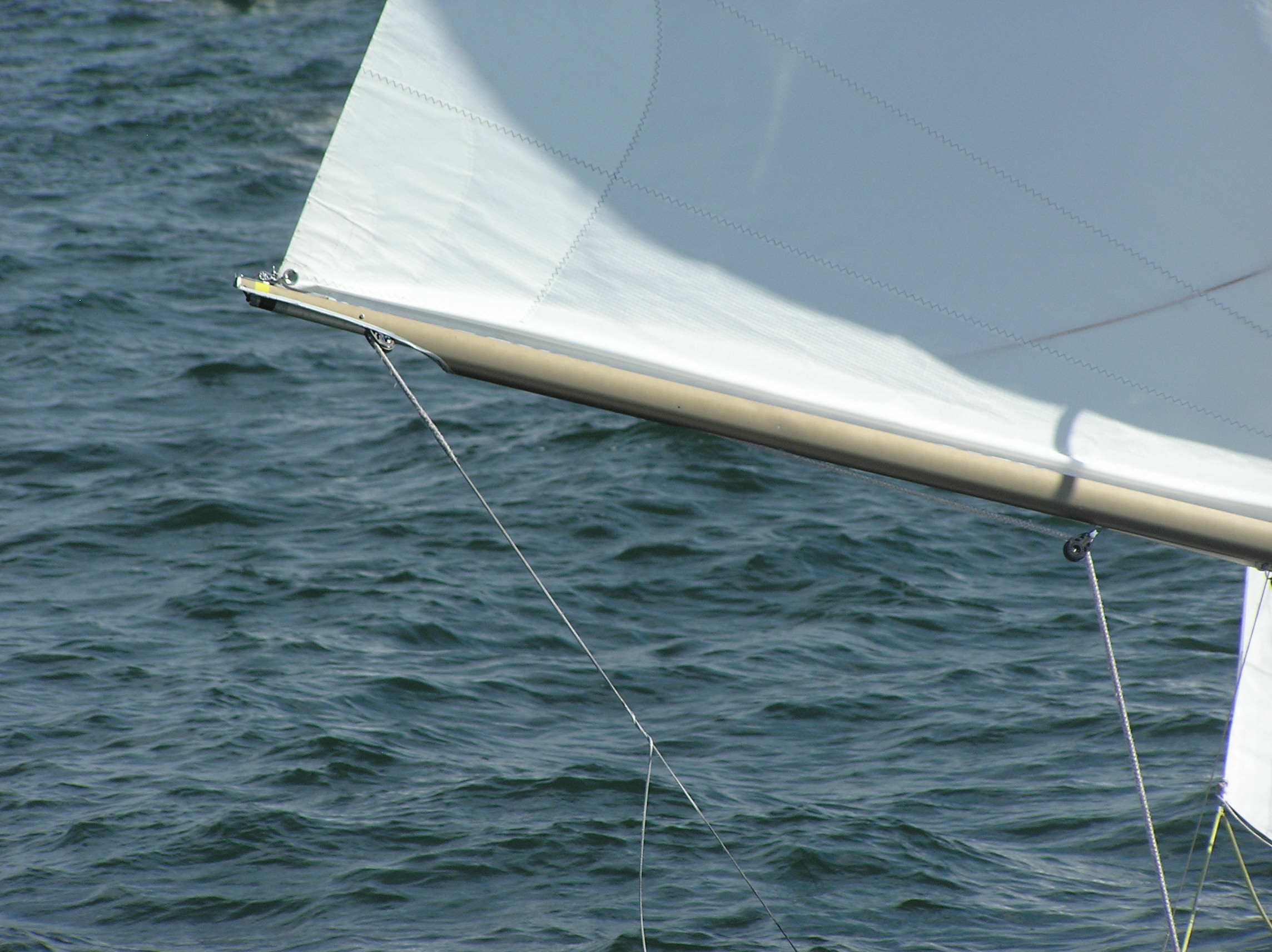 roquette boom.JPG
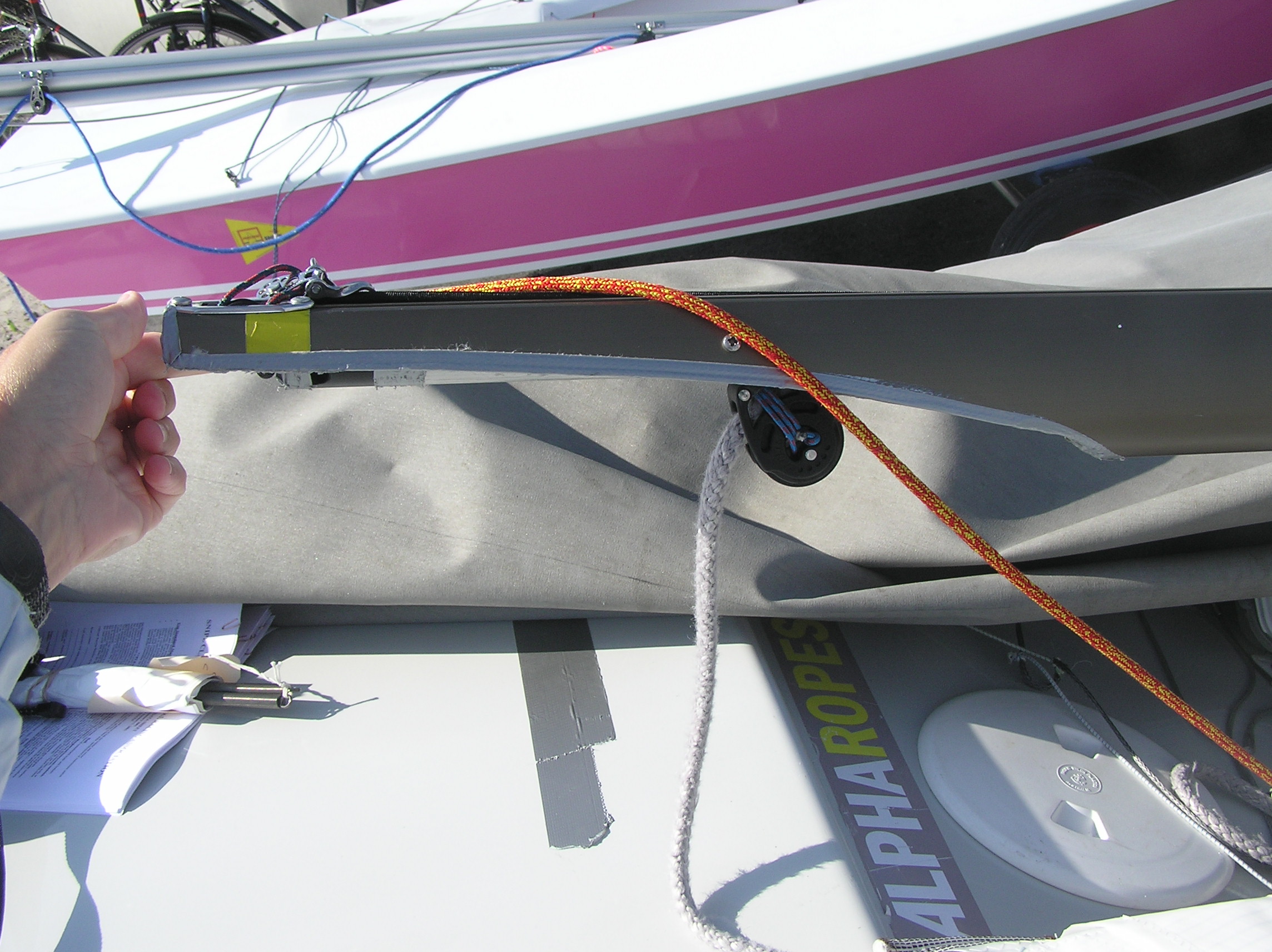 roquette boom2.JPG
